When to Worry: Is My Child’s Behavior Normal?
Understanding the Difference Between Normal Development and Behaviors of Concern
3/10/2026
Many parents wonder whether a child’s behaviour is simply part of normal development or something that needs closer attention. Children grow through many phases, and behaviours such as mood swings, stubbornness, or high energy are often part of typical development.
Sometimes, however, parents feel that something about their child’s behaviour seems different. Before immediately worrying about conditions such as autism, ADHD, or other developmental difficulties, it can help to pause and observe the child carefully.
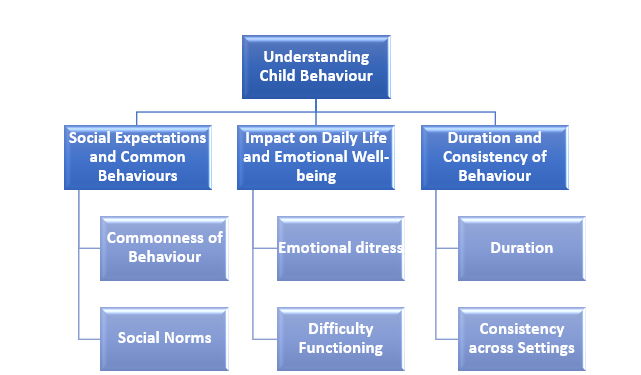
Professionals often look at three key factors when trying to understand whether a behaviour is part of normal development or whether it may require further evaluation.
1. Social Expectations and Common Behaviours
One way to think about a child’s behaviour is by comparing it with what is commonly seen in other children of the same age.
Commonness of Behaviour
Some behaviours occur occasionally in most children. For example, children may become upset, refuse instructions, or withdraw briefly during stressful situations.
However, if a behaviour occurs very frequently or is unusually intense, it may suggest that the child is struggling in some way. Examples might include consistently avoiding social interaction, extreme emotional reactions, or very unusual patterns of behaviour.
Social Norms
Each age group has certain expectations for behaviour. Children gradually learn to understand social cues, regulate their emotions, and interact with others.
If a child frequently reacts with overwhelming anger to minor situations, or struggles to understand how to respond socially, it may indicate difficulties with emotional regulation or social understanding.
2. Impact on Daily Life and Emotional Well-being
Another important question is how much the behaviour affects the child’s everyday functioning and emotional state.
Emotional Distress
Pay attention to how your child appears to feel. If they often seem anxious, sad, irritable, or overwhelmed, their behaviour may reflect underlying emotional distress.
Difficulty Functioning
Consider how the behaviour affects daily activities. If a child struggles significantly with school tasks, maintaining friendships, or participating in everyday routines, it may indicate that additional support is needed.
When behaviours begin interfering with learning, relationships, or emotional well-being, it may be helpful to seek professional guidance.
3. Duration and Consistency of Behaviour
To understand whether a behaviour is simply a phase or something more persistent, it is important to observe how long it lasts and where it occurs.
Duration
Temporary behaviours often appear during periods of stress or developmental change. However, when certain behaviours continue for several months without improvement, they may require closer attention.
Consistency Across Settings
It is also useful to observe whether the behaviour appears in different environments. If a child shows the same patterns at home, school, and during social interactions, it may suggest a deeper developmental or psychological concern.
On the other hand, if the behaviour appears only in one setting, it may be related to that specific environment.
Observing with Care and Understanding
Understanding a child’s behaviour is not about labeling them. Instead, it is about noticing patterns and recognizing when a child may benefit from additional support.
By observing:
how common a behaviour is
how much it affects daily life
how long it has been present
parents can develop a clearer understanding of their child’s needs.
If concerns continue, consulting a pediatrician or child development specialist can help guide the next steps and ensure the child receives the support they need to grow and thrive.